
BER Assessors
A Building Energy Rating (BER) describes how energy efficient a home is. In Ireland, a valid BER is compulsory when a home is offered for sale or rent, and the owner is responsible for getting it. The assessment must be carried out by an independent assessor who is registered with the Sustainable Energy Authority of Ireland (SEAI).
Who needs a BER
Citizens Information and SEAI both state that you must have a BER if you are selling or renting a property. All new homes must have a BER. Advertisements for the property must show the BER. SEAI says you should be able to see the BER rating, BER number and energy performance indicator in the advertisement or from the selling or letting agent. If those details are missing, you can contact the agent or notify your local building control authority.
If you are buying a new home off the plans, SEAI says you will be given a provisional BER, valid for two years and based on the design. After the home is built, you should get a final BER based on a survey of the completed building.
Some buildings do not need a BER when they are sold or rented. Citizens Information lists these exemptions, which include stand-alone buildings with floor space of less than 50 square metres, protected structures, national monuments, places of worship, non-residential agricultural buildings, certain temporary buildings, and industrial buildings that are not meant for human occupancy and have an installed heat capacity of less than 10W/m². A protected structure is BER-exempt, but you can still choose to have an assessment. SEAI also points to the exceptions in Section 4 of S.I. 243.
The BER scale and how long a certificate lasts
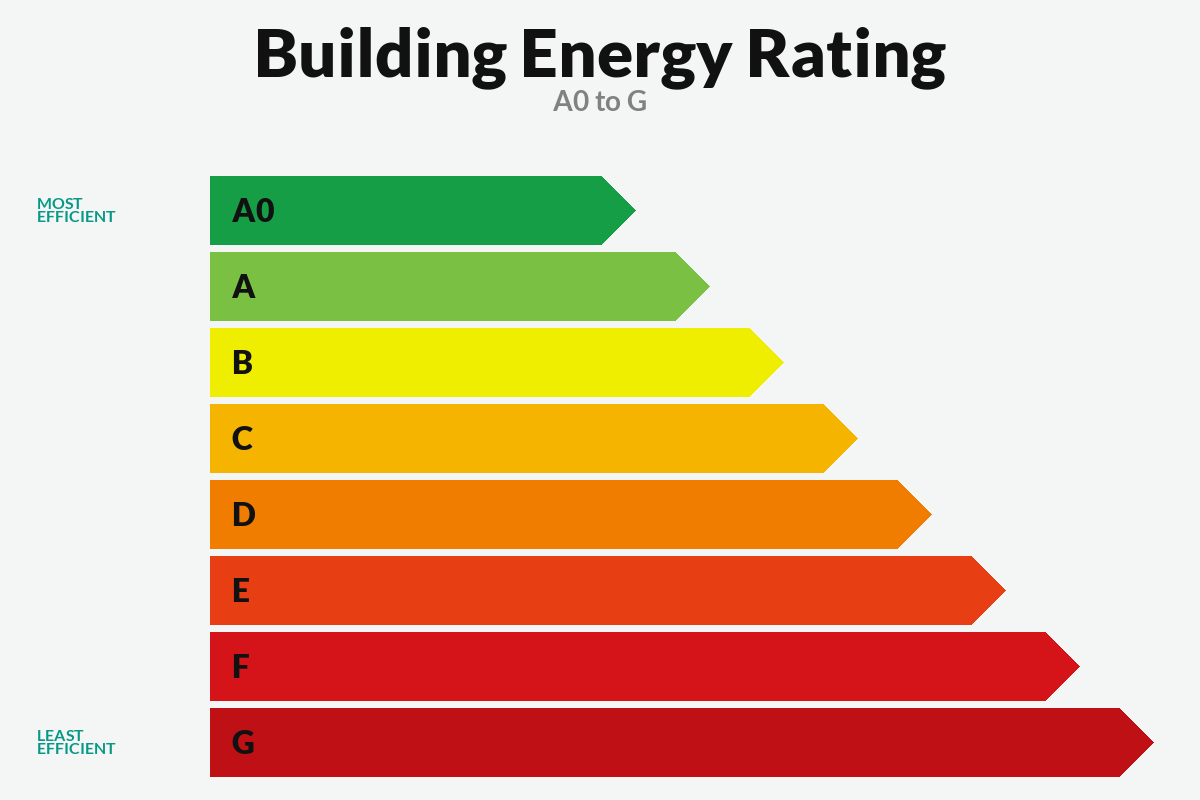
The current scale described by Citizens Information runs from A0 to G. A0 is the most energy efficient. A0-rated homes do not use fossil fuels — for example, a home with a gas boiler cannot get an A0 rating. G is the least efficient.
Until 24 May 2026, BER certificates used a more detailed 15-point scale with sub-categories such as B1 and C2. On that date the scale was changed to align with other EU countries. An older certificate that still uses the previous scale remains valid until it expires.
A BER certificate is valid for up to 10 years from the date it was issued, unless you make changes that affect energy performance, such as a new extension or a new heating system. SEAI cannot provide copies of expired BERs. If the certificate has expired, or those works have been done, you need a new assessment.
What you receive
The assessor gives you a BER certificate and an Advisory Report with recommendations on how to improve the rating. Citizens Information says a certificate issued from 24 May 2026 also includes information about how the property uses energy and renewable energy, carbon emissions, and energy upgrades, and it has a QR code linking to upgrade information. You can look up an existing certificate and its expiry date on the SEAI National BER Register using the Meter Point Reference Number (MPRN) from an electricity bill, or the BER number from the certificate.
What the assessment involves
The assessor surveys the home, including the attic and garage if you have them, and takes photographs. They record the year the property was built, insulation, building type, dimensions, heating, ventilation, lighting and any renewables. The rating is based on the building, not on how many people live there, so homes can be compared. Citizens Information says the inspection normally takes between 30 minutes and 1 hour, depending on the size of the home.
SEAI recommends giving safe access to the attic, meters, heating controls, hot press, doors and windows, and always asking the assessor for proof of identification. Prepare paperwork in advance: your MPRN and Eircode, any previous BER, evidence of the year built, documents for upgrade works, and details of the boiler, windows and doors. If you cannot provide enough documentation of works, the assessor must use conservative default values, which can result in a lower rating than you expected.
What it costs
SEAI does not set BER prices. Each assessor sets their own. Citizens Information states that the cost for an apartment is around €150, while the cost for a standard house is between €200 and €300, depending on the assessor and the size of the home. Both Citizens Information and SEAI recommend getting at least three quotes. Your chosen assessor should give you a letter of engagement or signed contract describing the work, the price including VAT and expenses, and any relevant business interests.
If you have completed certain works under the SEAI Better Energy Homes grant programme, SEAI provides a €50 grant towards the post-works BER assessment. That grant is towards that assessment, not a general price cap.
A BER assessor must be engaged directly by the building owner and must carry out assessments independently of installers or other energy-related suppliers, under Section 11 of the SEAI BER Assessor Code of Practice. They are not SEAI employees.
Checklist
- Search the National BER Register first — the property may already have a valid certificate.
- If you need a new BER, use only an assessor on the SEAI National Register of BER Assessors.
- Get at least three written quotes and a letter of engagement that includes VAT and expenses.
- Finish any upgrade works before the survey, and gather documents that prove what was done.
- Check the certificate’s expiry date, and that advertisements show the BER, BER number and energy performance indicator.
- Ask for identification before you let an assessor into your home.
Frequently asked questions
Who arranges the BER when a home is for sale?
The owner is responsible for getting the BER. Buyers can still look the certificate up on the National BER Register and should be able to see the rating in the advertisement.
Does a good BER matter?
Citizens Information notes that a better rating generally means a home stays warmer, has lower energy bills and produces lower carbon emissions. A weaker rating may mean you need to budget for energy upgrades.
What if a BER has been revoked?
SEAI says a BER can be revoked after a quality-assurance audit. The assessor should tell you, ask you to destroy the revoked documents, and issue a replacement. If they cannot replace it, they should provide a refund.
Who do I contact if I have a problem with an assessment?
SEAI advises contacting the assessor first, then the SEAI BER helpdesk if you still need help. The BER helpdesk email published by Citizens Information is info@ber.seai.ie.
Find a professional
Use the official SEAI registers. Only a registered BER assessor can produce a certificate that is published on the national register.
SEAI register of BER assessors Search the National BER Register
Sources
The guidance on this page is drawn from the official and public sources below. We have written it in our own words. Please read the original pages for the full, up-to-date text.
- Citizens Information — Getting a Building Energy Rating for your home — includes the apartment and house cost figures cited above
- SEAI — Get a BER assessment
- SEAI — Find an existing BER
- SEAI National Register of BER Assessors
- SEAI National BER Register
- SEAI — Building Energy Rating (BER) grant (€50 towards a post-works BER on certain grant works)
- Citizens Information — Steps involved in buying a home