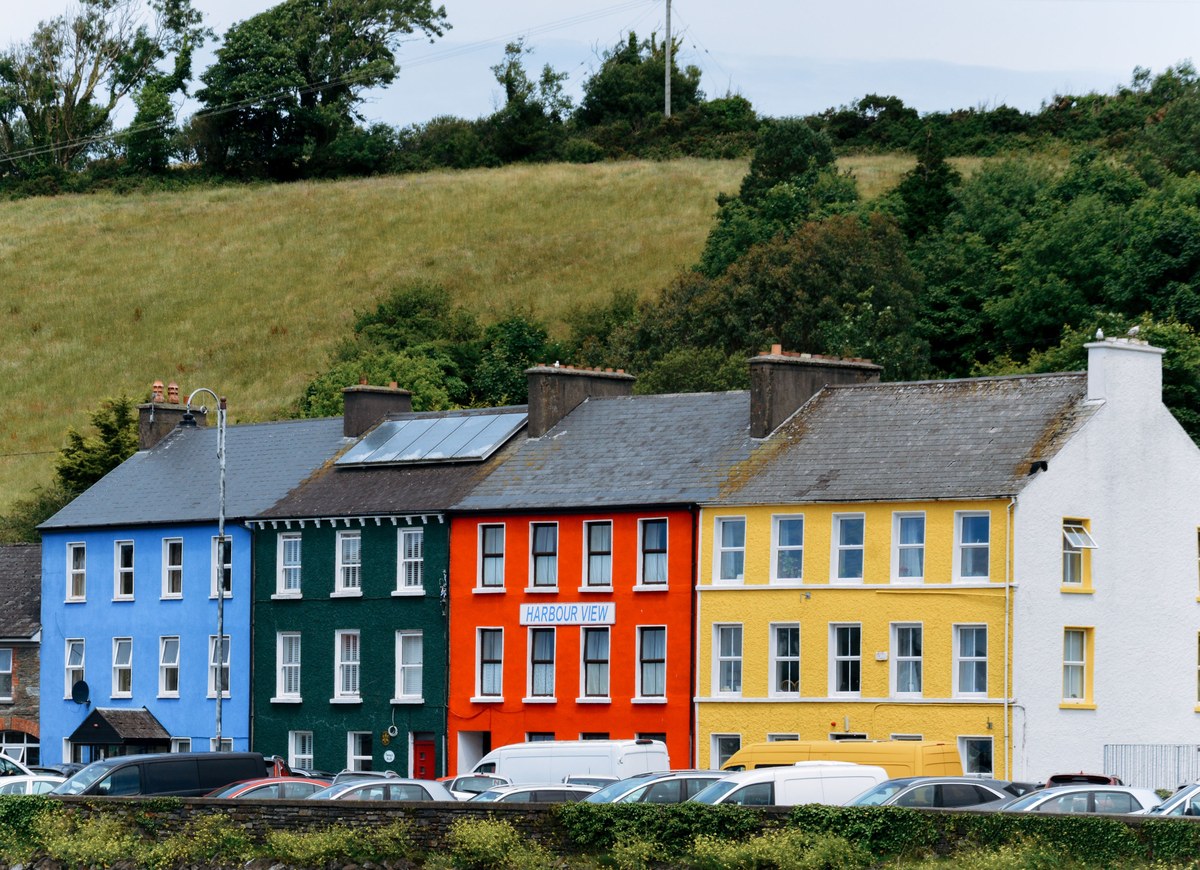
Colourful houses in Bantry, County Cork. Photo: Anna Lupa / Pexels.
Home-buying guide
Buying your home in Ireland in 2026 and 2027
A practical, step-by-step guide to buying a house or apartment in Ireland this year and next: how much you can borrow, the supports that may help with a deposit, and the legal, survey and tax steps between first viewing and getting the keys.
Updated November 2026. Figures are those published by the official or public sources linked below. They can be revised.
The market in 2026 and 2027
Start with official sold prices, not guesswork. The Central Statistics Office’s Residential Property Price Index for September 2026 (published 18 November 2026) shows national residential prices up 4.7% in the 12 months to September, easing from 5.1% in the 12 months to August. Dublin was up 3.9%; prices outside Dublin were up 5.4%. Nationally, house prices rose 4.6% and apartment prices 5.8%. The CSO notes that the latest three months are provisional, because the index uses Revenue stamp duty returns. In September 2026 it recorded 4,714 household dwelling purchases, worth €2.18 billion.
Asking prices are a separate measure. The MyHome Property Report for the third quarter of 2026, in association with Bank of Ireland, put annual asking-price inflation at 3.9% nationwide, 2.1% in Dublin and 4.8% elsewhere. The median asking price was €390,000 nationally, €480,000 in Dublin and €349,000 outside the capital. Stock had improved: 14,630 properties were for sale at the end of the quarter, up 12.5% on the year.
Mortgage demand has stayed firm. Banking & Payments Federation Ireland reported 14,217 mortgages, valued at €4,598 million, drawn down in the third quarter of 2026 — up 13.1% in volume and 15.7% in value on a year earlier. First-time buyers were the largest group, with 8,164 drawdowns, the highest third-quarter volume since 2008, and 57.4% of drawdowns by volume. Of those, 3,244 were for new properties and 4,920 for second-hand homes. In the first nine months of 2026 there were 35,449 drawdowns, worth almost €11.4 billion. Approvals in the 12 months to the end of September came to 56,486 mortgages, valued at over €18.3 billion.
None of this is a forecast for 2027. Official figures will keep moving, and a particular street can differ from the national average. Before you decide what to bid, check recent sales on the Residential Property Price Register and compare what is actually for sale on Pads.

Coastal houses in Dingle, County Kerry. Photo: Oleksandr Kobuta / Pexels.
Budgeting and Central Bank mortgage rules
What a lender may offer you is capped by the Central Bank of Ireland’s mortgage measures, and by the lender’s own affordability assessment. The two Central Bank limits that matter most are loan-to-income (LTI) and loan-to-value (LTV).
Loan-to-income
First-time buyers can generally borrow up to four times their gross annual income. Second and subsequent buyers are generally limited to 3.5 times gross income. “Gross income” is your income before tax; for a joint application, lenders add the two incomes together. These are ceilings, not a promise: the lender must still be satisfied that you can afford the repayments.
Loan-to-value and your deposit
On a principal home, the Central Bank’s LTV limit is 90%. In practice that means you need a deposit of at least 10% of the purchase price. Buy-to-let buyers need a 30% deposit. Help to Buy (see below) can count towards a first-time buyer’s deposit on a qualifying new home.
The allowance, or “exception”, pool
Lenders may exceed the limits for a slice of their lending: 15% of first-time buyer lending, 15% of second and subsequent buyer lending, and 10% of buy-to-let lending. This is sometimes called a macro-prudential exception. It is at the lender’s discretion. You cannot count on being offered one, and if you take an exception you will not qualify for the First Home Scheme.
Bridging loans
In April 2026 the Central Bank exempted certain “principal home bridging loans” — loans of no more than 18 months, used to buy a new principal home before the current one is sold — from the loan-to-income limit. The 90% loan-to-value limit still applies, measured against the original home, and lenders must still assess suitability and affordability.
A simple example
Two first-time buyers with combined gross income of €90,000 could, under the LTI cap, borrow up to €360,000 (four times income). With a 10% deposit they could look at homes around €400,000, before stamp duty, legal fees and other costs. A second-time buyer couple with the same income would be limited to 3.5 times income, or €315,000, plus their deposit. Always run the numbers with a lender or broker, and try a calculator such as the AIB mortgage calculator linked from Pads.ie, remembering that a calculator is only an illustration.
Budget for more than the deposit and the monthly repayment. Stamp duty, legal fees, a survey, a lender’s valuation, insurance and moving costs add up quickly. The Competition and Consumer Protection Commission (CCPC) sets these out in its mortgage guidance, and we summarise them in the costs section below.
Mortgage approval in principle
Get approval in principle — sometimes called an agreement in principle or a decision in principle — before you bid seriously. It is a lender’s indication of how much it may lend you, based on the information you have given, and it is not a binding offer on a particular property.
You will usually be asked for identification, proof of income, bank statements, details of debts and outgoings, and evidence of your deposit. The lender will assess affordability, not only the Central Bank caps. That assessment looks at your existing loans, credit record, childcare, commuting and everyday spending, and at the likely repayment if interest rates rise. Shop around: rates, fixed terms, fees and cash-back offers differ, and the CCPC encourages you to compare more than one lender or to use a mortgage broker. A broker can be useful, but you should still understand the product you are taking, including any early-repayment charge if you fix the rate.
Think too about the type of rate. A fixed rate gives you certainty for a period; a variable or tracker-style rate can move. Some loans combine a fixed period with a variable rate afterwards. Ask what happens at the end of a fix, whether you can overpay, and what fees apply if you sell or switch. The cheapest headline rate is not always the cheapest loan once fees and cash-back conditions are included.
Approval in principle typically lasts for a set period, often around six months, but you must confirm this with the lender. Your circumstances must not have changed materially when you later apply for a formal letter of offer. Do not sign a contract for sale, or bid at auction, until you have formal approval for that property.
Once a sale is agreed, the lender will value the property (the CCPC puts a typical valuation fee at around €150 to €250), re-check your finances, and, if satisfied, issue a formal letter of offer. That letter goes to you and to your solicitor, and it usually has an expiry date and conditions that must be met before drawdown.
Try the mortgage calculator Search homes on Pads
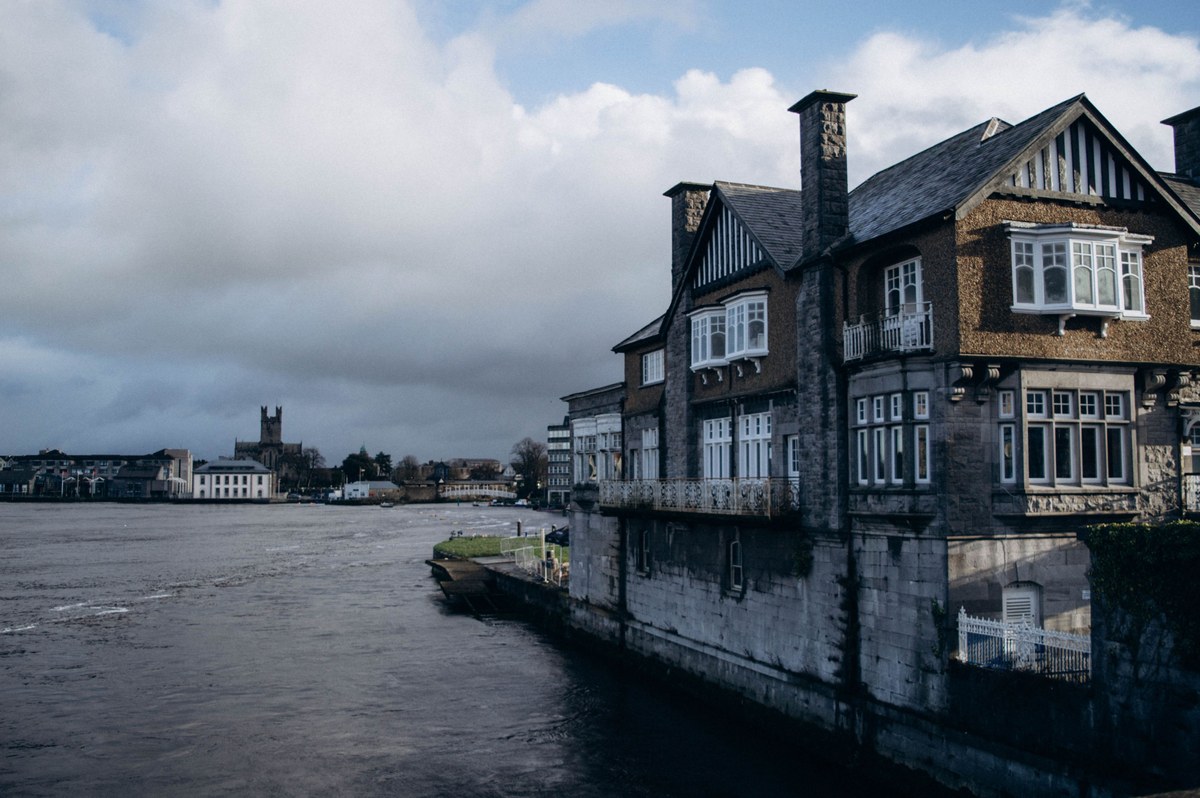
A house on the Shannon in Limerick. Photo: Liudmyla Shalimova / Pexels.
Help to Buy, First Home Scheme and Local Authority Home Loan
Three official supports are aimed mainly at first-time buyers. They have different rules, and some can be combined while others cannot. Always check the official pages, because limits and dates change.
Help to Buy
The Help to Buy (HTB) scheme, administered by Revenue, is a refund of income tax and Deposit Interest Retention Tax (DIRT) you have paid in Ireland in the four years before the year you apply. It does not refund PRSI or USC. It applies only to first-time buyers of a new home, or a self-build, that will be your home, with a market value of €500,000 or less, purchased between 1 January 2017 and 31 December 2029.
In Budget 2027 the maximum claim rose from €30,000 to €35,000. The higher cap applies if you sign the contract for a new house, or draw down a self-build mortgage, between 7 October 2026 and 31 December 2029, and you meet the other HTB conditions. You can claim the lesser of €35,000, 10% of the property’s market value (or the approved valuation of a self-build), and the income tax and DIRT you actually paid in those four years.
Your mortgage with a qualifying lender must be at least 70% of the purchase value (or of the approved valuation, if you are building). If you also use the First Home Scheme, that equity is left out of the 70% calculation; only the mortgage counts. If you use the Starter Home Purchase Scheme, the local-authority equity is included in the 70% test.
First Home Scheme
The First Home Scheme is a shared-equity scheme. The scheme takes a percentage stake in the property, which you can buy back later. You can receive up to 30% of the market value, or 20% if you are also claiming Help to Buy. The minimum is the higher of 2.5% of the price or €10,000.
You must have a deposit of at least 10% (Help to Buy can contribute to it), borrow the maximum available to you from a participating lender, and stay within the price limits for your local authority area. Participating lenders currently include Bank of Ireland, Permanent TSB and Allied Irish Banks (including AIB, Haven Mortgages and EBS). You will not qualify if you are taking a macro-prudential exception with that lender. You also cannot use a Local Authority Home Loan to buy under the First Home Scheme.
Price limits are reviewed from time to time. The figures below are those listed by Citizens Information when this guide was written in November 2026. Always confirm the current cap for your local authority on the First Home Scheme website before you make an offer.
| Local authority area | Price limit (buying or building) |
|---|---|
| Cork City, Dublin City, Dún Laoghaire-Rathdown, Fingal, South Dublin, Co Wicklow | €500,000 |
| Galway City, Co Kildare, Co Meath | €475,000 |
| Co Cork, Co Galway, Limerick City and County | €450,000 |
| Co Kerry, Co Louth, Co Mayo | €425,000 |
| Waterford City and County | €400,000 for houses; €450,000 for apartments |
| Co Clare, Co Donegal, Co Kilkenny, Co Laois, Co Leitrim, Co Roscommon, Co Sligo, Co Westmeath, Co Wexford | €400,000 |
| Co Carlow, Co Cavan, Co Longford, Co Monaghan, Co Offaly, Co Tipperary | €375,000 |
Citizens Information notes that duplexes are treated under the house limits. If you later sell or rent a First Home Scheme property, you must follow the scheme’s redemption and consent rules — see the scheme’s own guidance, and the selling notes in our Sell Your Home guide.

A cottage in Kilgarvan, County Kerry. Photo: Oleksandr Kobuta / Pexels.
Local Authority Home Loan
The Local Authority Home Loan is a government-backed mortgage, issued through your local authority, for first-time buyers and some “fresh start” applicants (for example after a relationship breakdown or insolvency, where you no longer have a financial interest in a family home). You must be aged 18 to 70, show insufficient offers of finance from two regulated lenders, and be able to afford repayments of less than one-third of household income. You can borrow up to 90% of the property’s market value, so a 10% deposit is required.
Income and property-value caps rose on 1 April 2026 and are now the current limits. A single applicant may have gross income of up to €80,000; the joint-applicant limit stays at €85,000. Maximum property values from 1 April 2026 are:
| Area | Maximum property value |
|---|---|
| Dublin, Kildare, Wicklow | €415,000 |
| Cork, Galway city, Meath | €375,000 |
| Galway county, Louth, Clare, Kilkenny, Limerick, Waterford, Westmeath, Wexford | €345,000 |
| Carlow, Cavan, Donegal, Kerry, Laois, Leitrim, Longford, Mayo, Monaghan, Offaly, Roscommon, Sligo, Tipperary | €310,000 |
Use the calculator on the Local Authority Home Loan website for an estimate, and apply through your local authority. The Department of Housing publishes scheme information on gov.ie.
Deposit, stamp duty, legal fees and other costs
Besides the deposit, budget for taxes, professional fees and insurance. The purchaser pays stamp duty. Your solicitor will usually collect it and pay Revenue so the deed can be stamped and then registered.
Stamp duty
For a normal residential purchase (fewer than ten houses in a year), Citizens Information (page edited 29 September 2026) and Revenue set the rates, for instruments executed on or after 2 October 2024, as:
| Property value | Rate |
|---|---|
| Up to €1 million | 1% |
| The slice between €1 million and €1.5 million | 2% |
| The slice over €1.5 million | 6% |
On a €450,000 home, stamp duty is €4,500. First-time buyers pay the same rates as other buyers; there is no first-time-buyer exemption, and Budget 2027 did not change the rates. A higher 15% rate can apply to bulk purchases of ten or more houses or duplexes in a 12-month period. Different rules apply to apartments bought together in the same block, and a single 7.5% rate applies to non-residential property. On a new home, stamp duty is generally calculated on the price excluding VAT — ask your solicitor to confirm the figure.
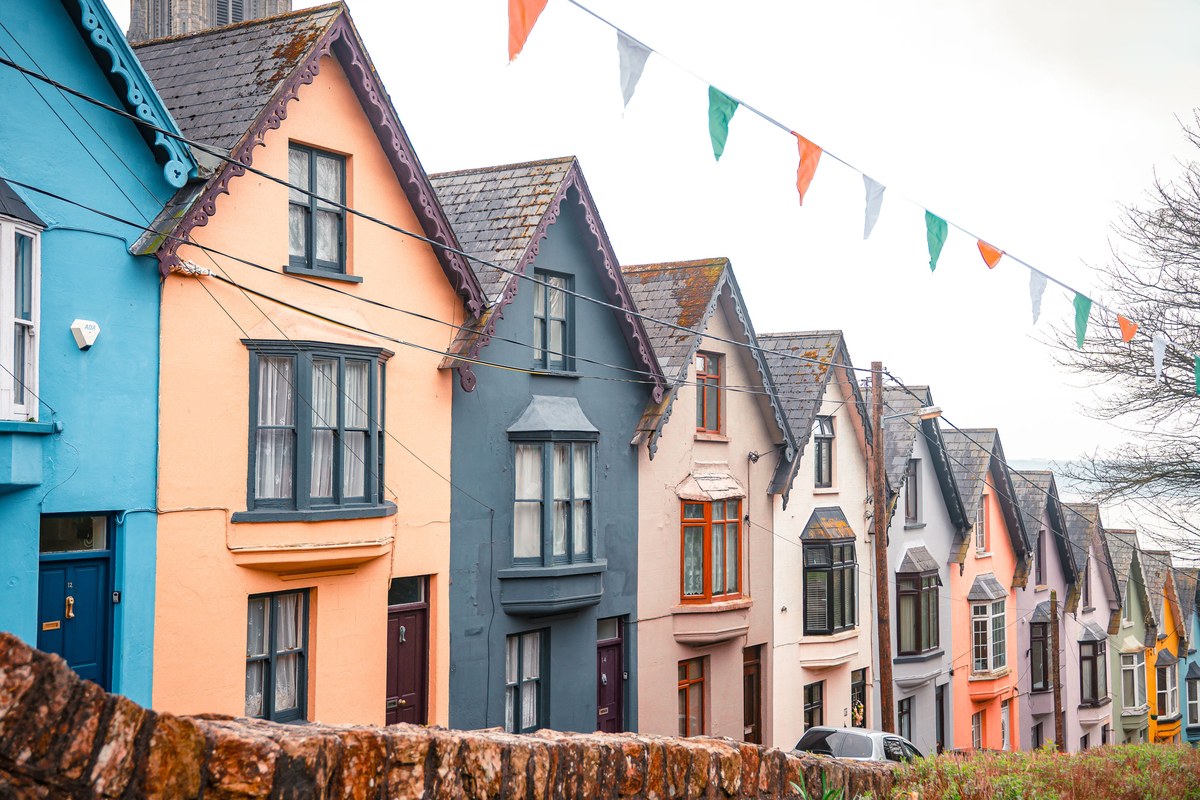
A row of houses in Ireland. Photo: Gonzalo Facello / Pexels.
Legal fees and outlays
The CCPC says a conveyancing solicitor’s fee is typically around €950 to €2,500 plus VAT, with searches, registration, postage and other outlays on top. In a May 2025 CCPC survey of people who had bought in 2024, buyers who could recall a figure paid an average of €4,524 in total legal costs, including registration, searches and VAT. Ninety-one per cent had received written details of likely costs in advance. You are entitled to a costs notice (a Section 150 notice) before you engage the firm. Get more than one quote. Our conveyancing solicitors guide explains the work involved, and you can search the Law Society of Ireland solicitor directory.
The CCPC also cites typical figures of about €400 to €800 for Land Registry fees (the scale varies with value), about €175 for mortgage registration, €70 to €250 for searches, and smaller sums for a commissioner for oaths and postage. Confirm current Tailte Éireann fees with your solicitor.
Valuation, survey, insurance
Budget for the lender’s valuation (around €150 to €250, according to the CCPC), a pre-purchase survey if you commission one, buildings insurance (required by the lender) and mortgage protection life cover. Local Property Tax will also need to be in order on closing.
Searching, viewing and BER
Search widely, then go and look. On Pads you can search homes for sale by location and type, and compare asking prices with recent sold prices on the Property Price Register. If you later sell, our Sell Your Home guide covers that side of the move.

A living room prepared for viewings. Photo: Viaceslav Kat / Pexels.
Viewing tips
- Visit in daylight, and if you can, again at a different time of day or in poorer weather.
- Walk the neighbourhood: traffic, parking, schools, shops, flood risk and noise are as much part of the purchase as the rooms.
- Look at the roof, gutters, walls, windows, attic, electrics, heating and any signs of damp or cracking. Take notes and photographs (ask first).
- Ask how long the property has been for sale, why the owners are moving, what is included in the sale, and whether there is a chain.
- Read the BER and the advisory report before or just after the viewing. A BER is not a survey of defects, but it tells you about running costs and insulation. Certificates and assessors can be checked on the National BER Register. Our BER assessors guide explains the scale, validity and exemptions.
- Do not be rushed into a bid on the doorstep. Leave, compare notes, and talk to your solicitor and lender first.
Pre-purchase surveys
A seller does not have to tell you about defects. Citizens Information and the Law Society advise you to commission a survey before you become bound by a contract. At auction, that means organising the survey — and formal mortgage approval — before you bid, because the successful bidder signs immediately.
The CCPC describes a walkaround inspection, a visual check with no written report, as typically around €150 to €250, and a full structural or building survey, with a written report, as typically around €400 to €800, depending on the size and complexity of the property. Some lenders require a structural survey for a very old or unusual building before they issue a formal offer. Even if they do not, a survey is for your own protection.
Use a surveyor who is appropriately qualified. The Society of Chartered Surveyors Ireland (SCSI) has a find-an-expert search. Our pre-purchase surveys guide explains the types of survey and when to instruct one.
Pre-purchase surveys BER assessors
Offers, bidding and sale agreed
Most Irish homes are sold by private treaty. You make an offer through the selling agent. The agent should record bids and keep you informed, and they act for the seller, not for you. The CCPC advises sellers — and the same logic helps buyers — to weigh mortgage approval, the deposit, any chain, and whether the buyer is paying cash, not price alone. A slightly lower offer from a buyer who is ready to proceed can beat a higher offer that is weakly financed.
There is no legal obligation on a seller to accept the highest bid, or to sell to you, until contracts are signed. “Sale agreed” means the seller has accepted an offer and both sides intend to proceed, but either party can still walk away until the contracts are executed. Do not spend money you cannot lose, or give notice on a tenancy, until your solicitor says the contract is signed and any conditions have been met.
On a private treaty sale you may pay a booking deposit once your offer is accepted. Citizens Information says this deposit is refundable up to the signing of the contract for sale. Have formal mortgage approval before you sign. If you sign and then cannot complete — for example because a loan falls through and the contract did not protect you — you can lose the contract deposit and may face other claims.
If the property is for sale by auction, treat the auction as the point of no return. Your solicitor should have reviewed the contract and title in advance, you should have a survey, and you should have formal approval for that property. The successful bidder signs and pays a deposit immediately.
Conveyancing, contracts and closing
Instruct a conveyancing solicitor as soon as you are seriously looking, not after you have agreed a price. They will review title, raise questions with the seller’s solicitor, deal with your lender, calculate stamp duty, complete the purchase and register your ownership with Tailte Éireann (Land Registry or Registry of Deeds). Complaints about solicitors go to the Legal Services Regulatory Authority. See our conveyancing solicitors guide and the Law Society’s property guidance.

Keys ready to be handed over. Photo: RDNE Stock project / Pexels.
The contract for sale is the document that binds both sides to complete on an agreed closing date, subject to its conditions. Your solicitor will explain any special conditions — for example planning compliance, vacant possession, or a loan condition if one has been agreed. Once you sign, withdrawing can mean losing your deposit.
Before closing, your solicitor will usually: finish searches; confirm the lender’s funds; collect stamp duty, fees and the balance of the price from you; check Local Property Tax; and arrange undertakings with the seller’s solicitor. On the closing day, funds are transferred, keys are released, and you become entitled to occupy the property. After closing, stamp duty is paid, the deed is stamped, and the title and mortgage are registered. Deeds cannot be registered until stamp duty has been paid.
Moving in
Plan the practical side early. Buildings insurance should be in place from closing, because the property is then at your risk. Tell the local authority, utilities and your insurer about the change of ownership, and redirect your post. If you are taking out a new mortgage, mortgage protection and any contents cover should be arranged so they start on the right day.

Packed and ready to move. Photo: Ketut Subiyanto / Pexels.
Do a final walk-through if you can, to check that items included in the contract are still there and that the property is in the agreed condition. If something is missing or damaged, tell your solicitor promptly. Keep your BER advisory report and survey; they are a useful list of improvements to consider once you have settled in.
Set up your household bills in your name from the closing date. Take meter readings on the day you move in. If you have bought in a managed development, ask for the owner’s management company details, the service-charge account, and any sinking-fund or house-rules information your solicitor has received. If you used the First Home Scheme, read the scheme’s rules before you rent the property out or sell it later — redemption and consent conditions apply.
If your circumstances change after you move in, the CCPC and your lender are the first ports of call on mortgage difficulty. Do not ignore arrears letters.
Contact Pads Selling? Read our seller guide
Buyer’s checklist
- Work out a budget that includes deposit, stamp duty, legal fees, survey, valuation, insurance and moving costs, not only the monthly repayment.
- Check the Central Bank LTI and LTV limits that apply to you, then compare lenders or speak to a broker.
- Get mortgage approval in principle, and keep it in date.
- See whether Help to Buy, the First Home Scheme or a Local Authority Home Loan could apply — and whether they can be combined in your case.
- Instruct a conveyancing solicitor early and get a written costs notice.
- Search listings on Pads and check comparable sales on the Property Price Register.
- View more than once where you can, and read the BER and advisory report.
- Commission a pre-purchase survey before you sign, or before you bid at auction.
- Do not sign a contract, or bid at auction, without formal approval for that property.
- Treat a booking deposit as refundable only until contracts are signed, and read what you are paying.
- On closing day, make sure insurance is in force, funds have cleared, and you have the keys and a list of what was included.
- After closing, your solicitor should stamp the deed, register the title and mortgage, and send you the papers.
Frequently asked questions
How much deposit do I need?
For a principal home, the Central Bank’s 90% LTV cap means a deposit of at least 10%, unless a lender uses an exception (which you should not rely on). Buy-to-let buyers need 30%. Help to Buy can help first-time buyers of new homes to make up the 10%.
Can I buy a second-hand home with Help to Buy?
No. Help to Buy is for a new build or a self-build, within the €500,000 cap and the other conditions. Second-hand purchases may still be eligible for a Local Authority Home Loan if you meet that scheme’s rules, but not for HTB.
Is “sale agreed” binding?
No. Either side can still withdraw until the contracts for sale are signed. Do not give up a tenancy or spend irrecoverable money on the strength of a sale agreed alone.
Do I have to get a survey?
It is not always a legal requirement, but it is strongly advised, and a lender may insist on one for some properties. A BER is not a substitute for a condition survey.
Who pays stamp duty?
The buyer. Your solicitor usually calculates it, collects it from you, and pays Revenue so the deed can be stamped and registered. The return is generally due within 44 days of the deed being executed. On a new home, ask whether the calculation is on the VAT-exclusive price.
How long does a purchase take?
It varies. After a sale is agreed, many private-treaty purchases take a number of weeks for surveys, formal mortgage approval, title queries and signing, then a further period to the agreed closing date. Chains, title problems, or a delay in loan funds can add time. Auction purchases move faster after the bidding, because the contract is signed on the day, so the preparation has to be done in advance.
Where can I get help if I am stuck?
For official explanations, use the Citizens Information, CCPC, Revenue, Central Bank and scheme websites linked in this guide. For your own purchase, speak to your solicitor and lender. You can also contact Pads if you have a question about using the site.
Useful official registers and Pads guides
Sources
Official and public sources used for this guide, fetched in November 2026:
- Central Bank of Ireland — Mortgage measures
- Citizens Information — Help to Buy scheme
- Revenue — Help to Buy incentive
- Citizens Information — First Home Scheme
- First Home Scheme
- Citizens Information — Local Authority Home Loan
- Local Authority Home Loan
- Citizens Information — Stamp duty on property (edited 29 September 2026)
- Revenue — Stamp duty rates
- CCPC — Understanding mortgages
- CCPC — From approval to closing
- CCPC — Engage a solicitor
- CCPC — Conveyancing research, May 2025 (average total legal costs of €4,524)
- Law Society of Ireland — Property legal guides
- CSO — Residential Property Price Index September 2026
- MyHome Property Report Q3 2026
- BPFI — Mortgage drawdowns Q3 2026
- Residential Property Price Register
- Department of Housing, Local Government and Heritage — gov.ie